
Hack The Future is a yearly organized hackathon in Antwerp where students get to compete and solve problems ranging from easy to difficult.
I decided to participate together with Elvis Los in 2024’s edition which was named Among The Stars.
Challenge
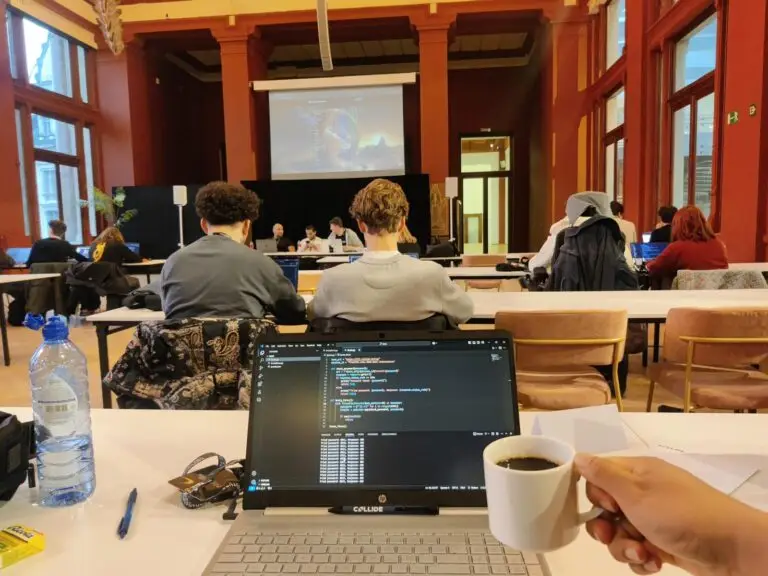
Together with my fellow IT student Elvis Los, I participated in a Capture The Flag (CTF) competition, where we competed against 11 other teams. The challenges included a mix of math problems, general problem-solving, and basic penetration testing tasks.
Each challenge could only be solved once per team, and submitting a correct answer earned us a badge that was displayed on a large screen. The tasks were relatively manageable, and what made the experience particularly engaging was seeing how differently each group approached the same problems—everyone brought their own unique perspective.
The second part of the challenge required each team to present their solutions creatively to the rest of the participants. This part of the competition was very open-ended—there were no right or wrong approaches, which encouraged creativity and variety in how teams chose to share their process.
Solution
After solving the Capture The Flag challenges fairly quickly, Elvis and I were unsure about how to approach the second part of the assignment. We weren’t entirely clear on what was expected, but once we realized that we had creative freedom, our ideas started to sync—and we quickly figured out which way we wanted to go.
Rather than creating a straightforward presentation where each solution was explained step by step, we decided to take a more engaging and interactive approach. Since the event was held near the Zoo of Antwerp, we came up with a small, themed game to present to the other teams.
In our game, the animals at the zoo are trying to escape after a lion goes on a rampage, becoming a danger to everyone. However, the only way out is through a number lock consisting of four digits. Each digit could be discovered by solving one of the original CTF challenges.
But there was a twist: even after gathering all four numbers, the code wouldn’t work right away. To unlock the final code, participants had to perform a brute force attack—adding an extra layer of problem-solving to the game and tying it back to the cybersecurity theme.
Result
Each challenge had two ways to win. The first was The General Winners Prize, awarded by the jury. The second was The Public Winners Prize, decided by peer voting—each group was asked to submit a form listing their top three favorite solutions.
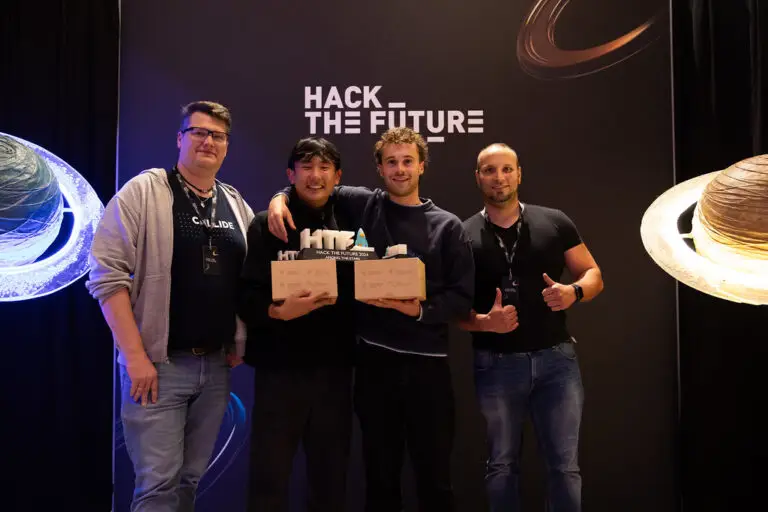
To our surprise, our solution turned out to be the favorite among all teams, earning us The Public Winners Prize. I never expected that participating in a hackathon would be this much fun—let alone that we’d actually win!
Winning this prize taught me that creativity is not only welcomed, but genuinely valued by others. It was a great reminder that thinking outside the box can make a lasting impression.